
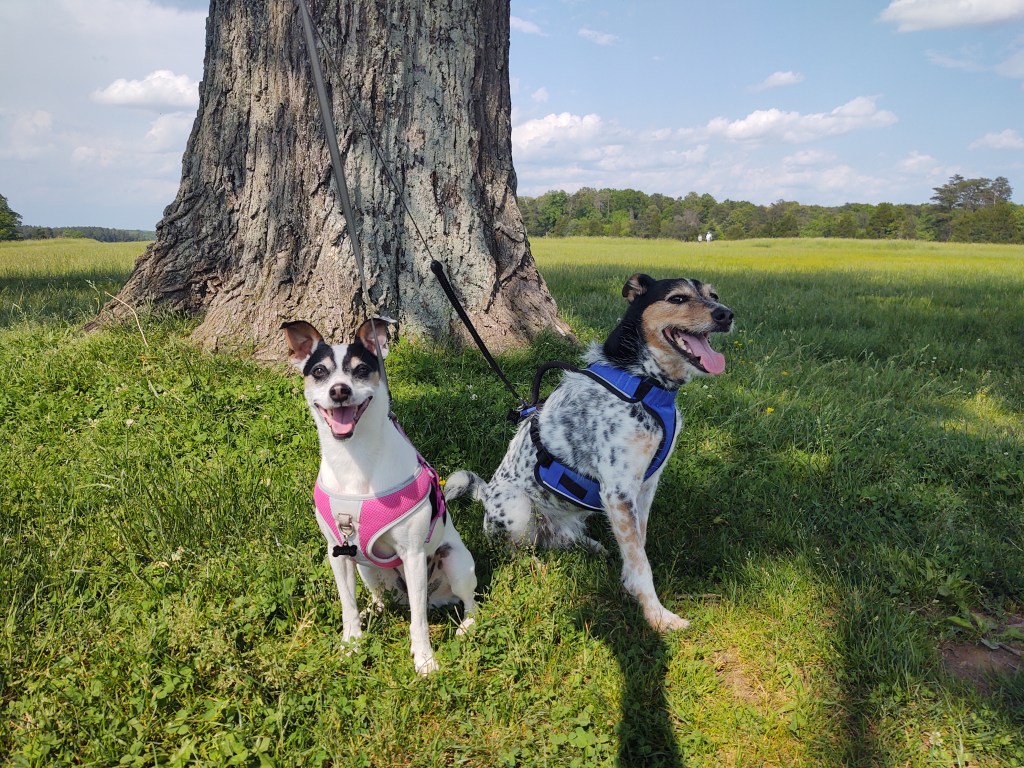
We love traveling with our dogs! We have breeds that are down for adventure and are portable sizes (17# Mountain Feist Agnes and 29# Blue Heeler / Jack Russell Terrier mix Dax). Our dogs are healthy and still youthful (6 and 7 years, respectively), so travel together is pretty no-fuss. Suggestions here may need to be adjusted for dogs that are larger or older, or have medical conditions.
An ounce of prevention is worth a pound of cure! Especially for a big trip, preparation is key to a safety and comfort:
- Check with your vet about vaccines and meds! Make sure your dogs are up-to-date on the shots they will need for being outdoors and/or in the wilderness. Ensure you have sufficient supplies of medications for heartworm and flea and tick prevention.
- B.A.R.K. Rangers A.lways leash! Our dogs love to run free, and we take them places where it is safe for them (and the environment) to do so. But the A in B.A.R.K. Ranger stands for “Always leash your pet”, because our National Park Sites are not safe places to let dogs run wild. Personally, I worry most about venomous snakes, but it’s also not cool for our dogs to harass the wildlife, or trample delicate ecosystems off the trail, ruining the experience for future visitors. Shaun is an Eagle Scout, and we want to abide by the principle of leaving a place better than we found it!
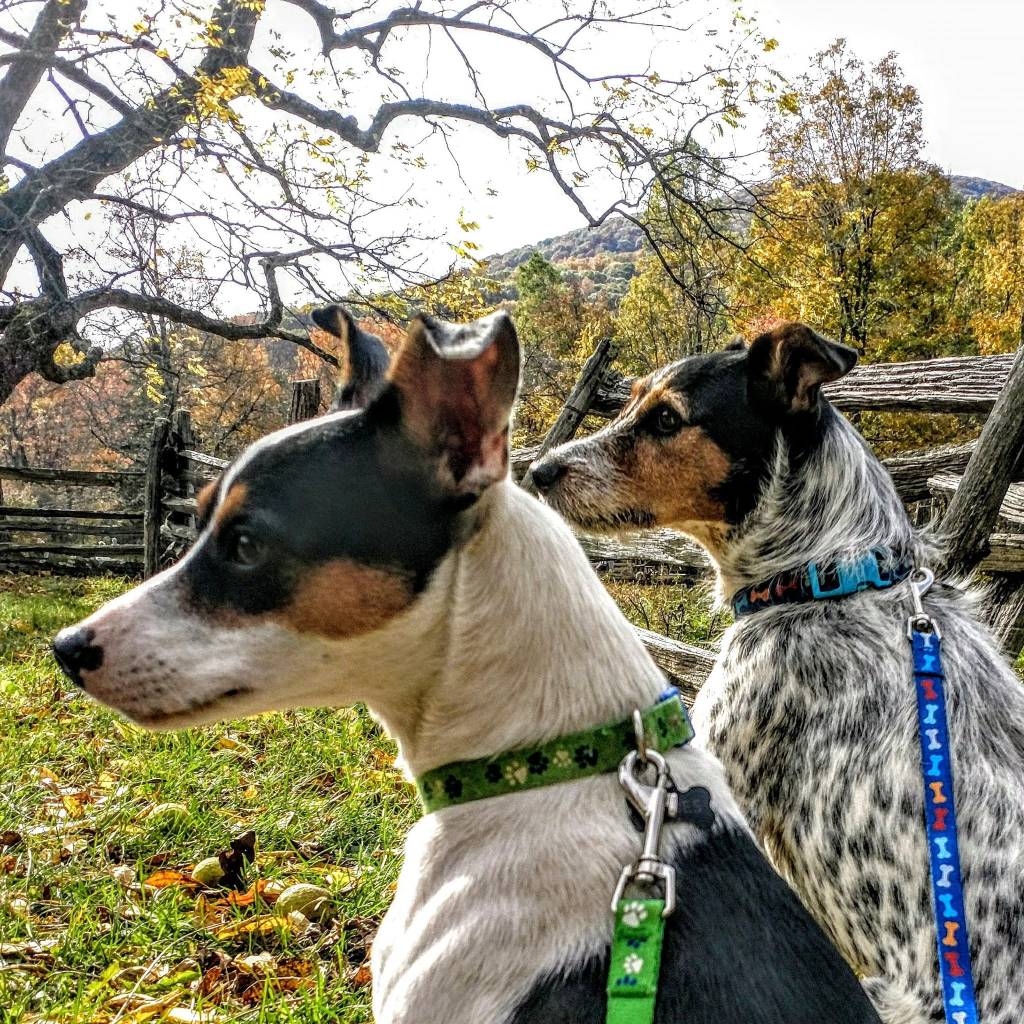
- Consider a harness (with something that jingles). Our little angel (yeah, right!) Agnes slipped her collar on walks around the neighborhood a couple of times. That was enough for us to research and try out different harnesses until we found ones that were the right fit. You can see the before and after photos of park visits and hikes on this page! Additionally, the dog tags we use dangle and clink. It may even be worthwhile adding a bell if you’re planning on serious hiking. This alerts wildlife and can help to prevent a surprising encounter (say, with a bear) that could turn dangerous.
- Have microchip information handy. If your dog were to get away from you, having their microchip number and provider information to share with nearby vets and animal shelters will be essential.
- Restock water often and make pit stops. Dehydration is a big risk for dogs when they don’t have their usual 24/7 access to water like they do at home. Pack plenty of bottled potable water (available at any grocery store), and make pit stops regularly for dogs to ‘do their business’ and get some water.
- Watch the ambient temperature. Along with dehydration, exposure is a big risk for dogs. Avoid heat exhaustion or frostbite by using all tools that can modulate extreme temperatures, including AC and the shade in the heat, and the heater and weatherproof attire in the cold. Don’t leave pets in the car unattended.
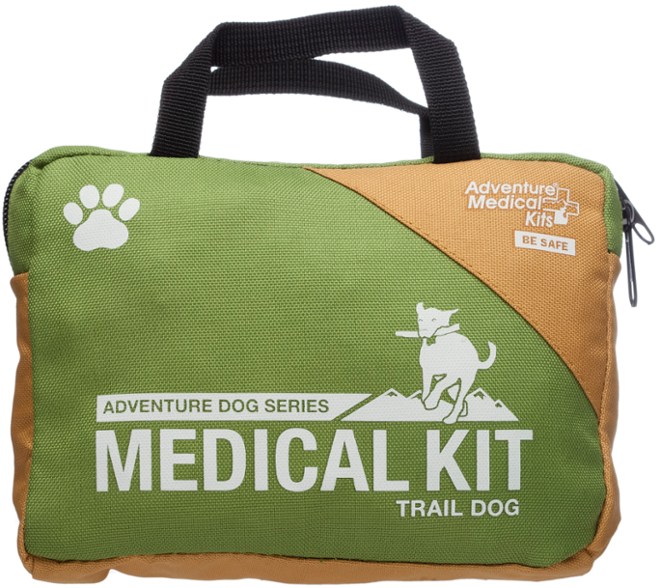
- Bring a first aid kit. Accidents happen! Be prepared to address minor injuries or allergies.
I found this article by veterinarian Dr. Stephanie Austin a handy resource when planning our trips. It goes into additional considerations, including wildlife traps, and even snake avoidance training.
With some advance planning and preparation, traveling with pets can be fun for them and for you!
 Bark Rangers
Leave a comment